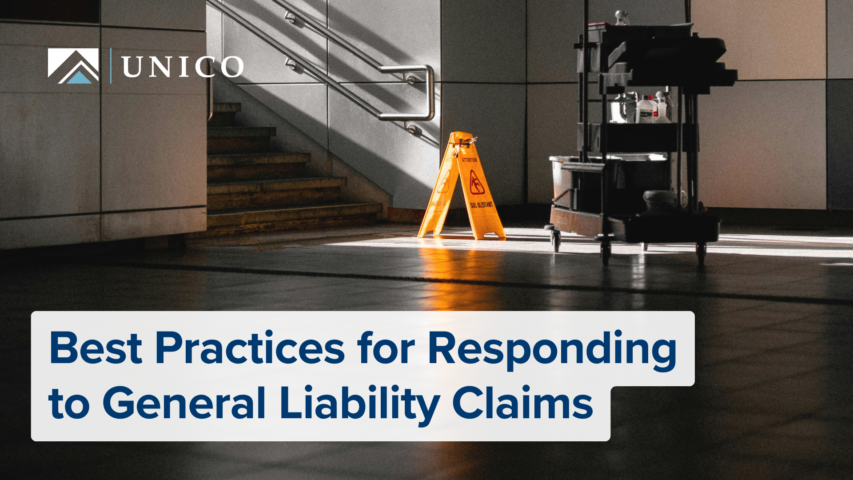
Unforeseen incidents can happen during everyday business operations, exposing organizations to potential liability. For example, a customer might slip on a wet floor, or a contractor could accidentally damage a client’s property. Even a single general liability claim can disrupt operations, cause financial strain and impact future insurance costs.
These impacts often worsen when organizations respond poorly to claims. A delayed or ineffective response can escalate disputes, increase litigation risk and postpone resolution.
A prompt and proper response to a potential general liability claim can significantly reduce your organization’s liability exposure and minimize damages. Thorough documentation provides your insurance carrier and their legal team with the essential evidence needed to defend against allegations. Together, businesses and insurers form a partnership in effectively managing liability when claims arise.
To strengthen your response strategy, we recommend organizations and their teams implement the following best practices.

Ensure Immediate Safety and Medical Attention
- Secure the area (e.g., cordon it off) to prevent further injury or property damage, deter unauthorized access, and keep the scene as unchanged as possible. Only move property if it is necessary to address immediate safety concerns.
- Call 911 if the incident involves injury or significant property damage and stabilize involved parties (e.g., provide first aid) until emergency response services arrive.
- Encourage injured parties to seek medical treatment, even if the injury appears minor. If no injuries are reported at the time, advise the individual(s) to inform the company if they later seek medical care for symptoms that arise afterward.
Conduct a Timely and Thorough Investigation
- Complete an incident investigation report form to document what happened. Include the date, time and location of the incident, who was involved, what the injured party was doing at the time, the nature of the injury or property damage, and any potential causal factors.
- Collect evidence that might be relevant to the claim and/or bolster your defense. Take photos of the scene from multipleangles. Promptly collect any security footage and gather contact details and statements from witnesses. Secure and preserve any damaged equipment or materials. Make sure not to destroy any evidence.
- Gather maintenance records, housekeeping reports and any other company documents that may be relevant to the claim or can help establish fault or lack thereof.
- Train employees — both before claims occur and continually afterward—to closely follow investigation procedures so key details and evidence are captured accurately and consistently.
Do Not Admit Fault or Make Liability Statements
- Train employees to act courteously, professionally and compassionately toward third parties while not admitting fault for the incident. Determinations of fault and liability should be left to the insurance carrier and its attorneys.
- Don’t reprimand employees at the scene or in front of third parties, as it might give the impression of fault.
- Don’t argue with the injured party or assign blame.
- Don’t offer to pay for medical expenses or replace damaged property, as this can be considered an admission of fault.
Control Communication and Information Flow
- Designate one person as the single point of contact for claim-related communications and ensure they are trained to deal with insurance representatives and attorneys.
- Refrain from discussing the case informally to protect the integrity of the investigation and prevent inconsistent or inaccurate accounts.
- Never post details or photos of the incident on social media, as such commentary could be used as evidence in litigation.
- Direct any attorney inquiries or claimant communications to the insurer.
Notify Your Insurance Partners Promptly
- Report the incident to your insurance partners, including your broker and carrier, as soon as possible, even if liability is unclear. Not reporting incidents within the time frame required by a general liability policy may affect the reimbursement of expenses or even result in claims denials.
- Provide your insurance carrier with preliminary documentation and all relevant details (e.g., date, time, location and parties involved).
- Follow the insurance carrier’s instructions for the next steps. For example, insurers may request site inspections, require copies of safety procedures or direct employees to avoid specific actions. Ensure these directions are followed precisely as given.
- Maintain incident reports, inspection logs, housekeeping records, training materials and any other documentation that may be required as the claim unfolds.
Final Thoughts
The immediate aftermath of a general liability claim can be challenging to navigate, and missteps may lead to complex litigation, reputational damage and unnecessary financial losses. As such, it’s critical that organizations and their employees understand that responding promptly and effectively can help improve claim outcomes.
Contact UNICO Group today for additional insurance and risk management guidance.

Megan Hatch, CPCU, CWCA, CRIS
Risk Consultant
The information provided in this article is for informational purposes only and should not be considered as legal or insurance advice. Please consult with a qualified professional for guidance tailored to your specific situation.