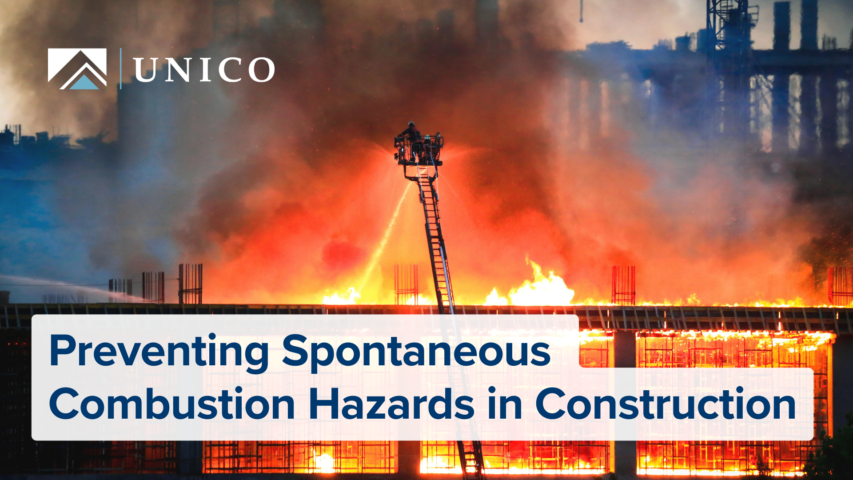
Fires are a significant risk to construction businesses. They can cause serious property damage, injuries and even loss of life. One often-overlooked source of fires is spontaneous combustion, or spontaneous ignition, in which fires start without the presence of an external heat source.
Several conditions can create the perfect environment for this to occur, particularly when combustible materials are improperly stored or disposed of. Understanding the factors that contribute to spontaneous combustion and taking proactive steps to address them can help you protect both your people and your property.

The causes of spontaneous combustion
Spontaneous combustion occurs when objects increase in temperature without an external heat source, eventually reaching a point of autoignition. Combustible materials can self-heat to temperatures high enough for ignition through chemical processes like oxidation or biological processes such as bacterial fermentation. Factors that can increase the likelihood of it occurring at your worksite include:
- Improper storage or disposal of combustible materials in poorly ventilated areas
- High ambient temperatures combined with dry conditions
- The presence of moisture and air
- High oxygen availability
In the construction industry, certain materials are particularly prone to spontaneous combustion, including:
- Oily or stain-soaked rags, fabric, towels and linens
- Oil-based paints
- Seed oils (such as linseed oil) and products containing seed oil
- Coal, charcoal and peat
- Sawdust and woodchips
Strategies to mitigate spontaneous combustion
The following strategies can help address spontaneous combustion risks at a worksite:
Education and training
Educate your employees about spontaneous combustion and train them on how to avoid conditions that may facilitate it.
Proper disposal procedures
Develop and implement clear disposal procedures. Provide employees with receptacles specifically rated for flammable materials to ensure safe handling.
Handling oily rags
Thoroughly dry oily rags by hanging them outside or spreading them out on a nonflammable surface before disposing of them. You may also immerse them in water before drying through these techniques. Check local laws that may regulate the disposal of rags and oily water.
Safe rag storage practices
Store rags in a metal container with a tight-fitting lid to prevent oxidation. Prohibit the disposal of rags in cardboard boxes, trash bins and debris piles. Ensure procedures are in place to monitor that this policy is being followed consistently.
Access to safety information + materials
Ensure your employees have access to Safety Data Sheets when using flammable materials. Provide fire extinguishers and other fire suppression systems at your jobsites. Regular maintenance to the materials and updates to your safety sheets ensures they’ll be ready when you need them most.
Material selection
Utilize noncombustible solvents or water-based materials when possible. This simple substitution can significantly reduce your risk.
Strategic placement
Keep materials at risk of spontaneous combustion away from buildings and structures. Avoid stacking or piling combustible materials in a manner that can trap heat. Materials susceptible to spontaneous combustion should be stored properly in well-ventilated areas.
Daily waste management
Remove and dispose of combustible waste daily and in an appropriate manner. Do not leave materials stored for extended periods, as this increases the risk of spontaneous combustion.
Final Thoughts
In the construction industry, spontaneous combustion represents a serious hazard that demands our attention and proactive management. By taking deliberate action to address this risk, you’re investing in the safety of your people and the protection of your property.
We’re committed to supporting you in creating a safer work environment. If you have questions or need additional guidance on managing spontaneous combustion risks or other safety concerns, please don’t hesitate to reach out to us.

Ezra Schlecht, CSHO, SSH, CRIS
Safety and Loss Control Consultant
The information provided in this article is for informational purposes only and should not be considered as legal or insurance advice. Please consult with a qualified professional for guidance tailored to your specific situation.