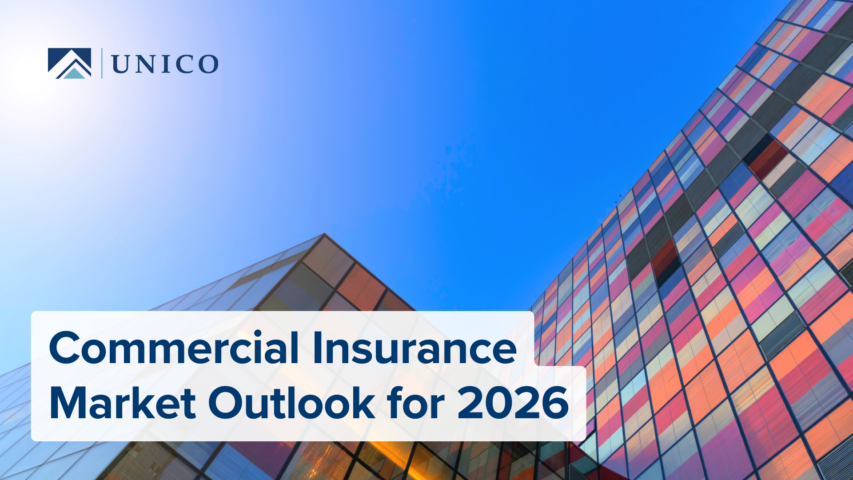
As we move into 2026, the commercial insurance market continues to adapt to ongoing challenges and opportunities. This outlook highlights key market trends, risks and strategies to help businesses navigate the complex insurance environment ahead.
Market Overview
The commercial insurance sector is showing signs of stabilization and moderation after years of hard market conditions. According to industry data, by mid-2025, many property renewals saw flat to single-digit changes, with some experiencing rate decreases. While underwriting profitability has improved and capacity has become more accessible, certain lines remain impacted by various challenges. Business leaders should be aware of concerns including:
- Persistent social inflation
- Litigation challenges and social inflation
- Continued losses from catastrophic natural disasters
- Emerging cyber risks
- Supply chain disruptions
- Need for data-driven approaches
Key Trends to Watch for 2026
Catastrophic Weather Losses: Extreme weather events continue to pose significant challenges for the commercial insurance market. According to the National Weather Service, tornado outbreaks during 2025 caused damage to over 50,000 structures, causing over 50 people to lose their lives and resulting in at least $15 billion in damages. Tornado outbreaks, along with wildfires, have led insurers to tightening underwriting standards and placing greater emphasis on climate resilience measures such as improved property construction, floodproofing, and defensible spaces.
Inflation and Supply Chain Volatility: Inflationary pressures, particularly in construction materials and labor, remain a major factor driving up claims and reconstruction costs. The National Association of Home Builders (NAHB) estimates that tariffs imposed on certain goods could inflate U.S. construction material costs by over $3 billion. This is prompting insurance companies to conduct more rigorous valuation assessments and encourage updated valuations to avoid potential coverage gaps.
Litigation Concerns: Social inflation and nuclear verdicts stemming from liability lawsuits continue to raise claims costs. According to the National Association of Insurance Commissioners (NAIC), the “social” aspect of this term represents shifting attitudes regarding who is responsible for absorbing risk. This means juries are more likely to award damages. About 135 corporate lawsuits across 55 different sectors led to nuclear verdicts in 2024, totaling $31.3 billion, marking a 52% increase in frequency and a 116% rise in severity compared to the prior year.
AI and Technology Exposures: Companies are being held more accountable for their alleged failures in addressing the risk associated with AI tools, should the tool lead to serious operational errors, privacy concerns or stakeholder misalignment. Emerging AI-related claims drivers span across several lines of coverage. Brokers and policyholders should work together to ensure adequate cyber protection for AI exposures.
Outlook by Insurance Line

Commercial Property
Pricing and capacity continue to vary widely based on risk profile and location. Non-catastrophe (CAT) exposed risks are seeing relatively stable conditions, with pricing expected to range from -5% to +5%. Cat-exposed risks remain challenged, with increases expected to be flat to 10%. Focus on accurate insurance-to-value calculations to ensure proper coverage and consider alternative risk financing options if you’re in a high-risk area.

-
Commercial Auto
Rate increases are expected between +8% and +15%, driven by ongoing challenges including a lack of skilled drivers, surging bodily injury claims costs and nuclear verdicts. In addition to reviewing coverage limits, policyholders should implement fleet safety programs and telematics such as GPS trackers or in-vehicle camera systems, to help address any risk behaviors.

-
General Liability
Rates are expected to see moderate increases of +1% to +6%, with variation based on industry history. Working closely with risk management experts to understand market changes and implement loss control measures will be key to managing premium impacts effectively.
-
Workers’ Compensation
As one of the most stable lines, workers’ compensation premiums are expected to range from -3% to +3%. However, medical and wage inflation continue to influence costs.

-
Cyber Security
Rates for cyber insurance are expected to range from -5% to +10%, reflecting ongoing market softening tempered by emerging AI-related cyber risks. Prioritizing robust cyber security measures and regularly updating incident response plans will be vital in 2026.

-
Umbrella/Excess Casualty
The umbrella/excess casualty insurance market continues to face hardening conditions. Premium increases are expected to range between +8% to +15%, with capacity remaining constrained. Policyholders with strong risk management and minimal loss history may experience more moderate rate changes.

-
Directors & Officers (D&O)
The D&O insurance market has encountered softening conditions for the past several years, with private and nonprofit companies seeing modest premium fluctuations between -5% and +5%. Public companies may experience flat to slight decreases. Despite expanded capacity and competitive pricing, underwriting is still influenced by competitive pricing, litigation risks, AI governance, regulatory changes and more.

Remember, the key to navigating this complex landscape is a tailored approach considering your unique risk profile and industry-specific challenges. To ensure your business is adequately protected, reach out to UNICO Group. Our team of experienced advisors can provide personalized guidance and innovative solutions tailored to your specific business needs in this evolving insurance landscape.