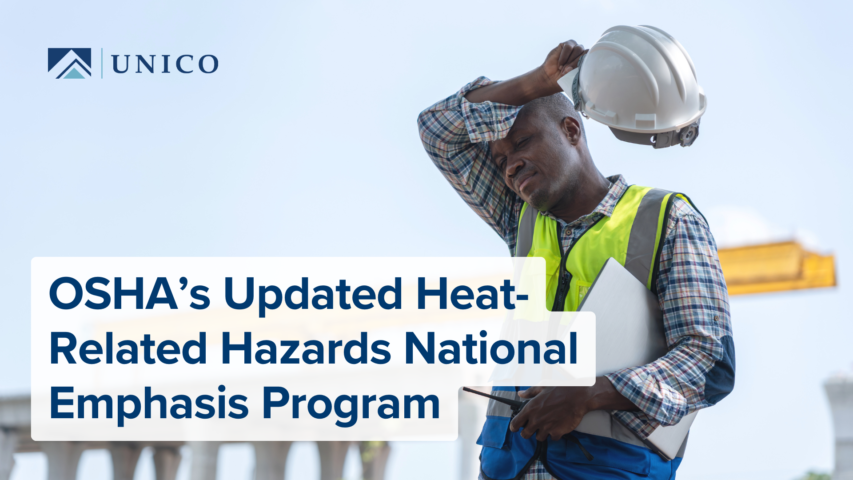
As temperatures rise, protecting workers from heat-related hazards is more important than ever. On April 10, 2026, OSHA updated its National Emphasis Program (NEP) to strengthen workplace safety against indoor and outdoor heat risks. This update reflects OSHA’s ongoing commitment to preventing heat-related illnesses and fatalities by focusing inspections and outreach on industries where workers face the highest risks.
The updated NEP is effective immediately and will remain in place until April 10, 2031. It builds on the original program launched in 2022, which aimed to identify and address heat hazards before they cause harm.

What Employers Need to Know
The revised NEP prioritizes inspections based on complaints and employer-reported hospitalizations. Rapid response investigations will be reserved for critical cases approved by area directors. Employers should review their heat illness prevention policies to ensure they:
- Provide access to water, rest and shade
- Include adequate training on heat hazards
- Implement acclimatization procedures for new or returning workers
The NEP focuses on high-risk industries such as general industry, construction, maritime, and agriculture. These sectors often involve outdoor work or indoor environments with radiant heat sources, making heat safety a critical concern.
How OSHA Conducts Inspections Under NEP
Inspections under the NEP are proactive and thorough. They may be triggered by:
- Heat priority days when the heat index reaches 80 degrees or higher
- Complaints, referrals, or reports of severe incidents
- Observations of heat hazards during routine visits
During inspections, OSHA compliance officers review injury logs, interview employees, and evaluate employer protections such as water availability and training programs. Even if no violations are found, OSHA may provide guidance to help employers improve their heat illness prevention programs.
Why Heat Safety Matters
Heat-related illnesses can range from mild cramps to life-threatening heat stroke. OSHA uses the heat index, a measure combining temperature and humidity, to assess risk levels.
- Caution: Below 80 degrees Fahrenheit
- Warning: 80 to 94 degrees Fahrenheit
- Danger: 95 degrees Fahrenheit or higher
Heat priority days occur when the heat index reaches 80 degrees Fahrenheit or higher, but serious heat illnesses can happen even below 80, especially when workers face heavy workloads, wear protective equipment, or lack proper acclimatization.
Employers should ensure workers are trained to recognize symptoms such as dizziness, headaches, or dehydration and implement procedures that gradually increase workloads and rest breaks for new or returning employees.
Collaboration for Safer Workplaces
OSHA encourages state plans to adopt similar heat safety policies and supports outreach to educate employers. Employers participating in voluntary safety programs may be exempt from some inspections but remain responsible for maintaining safe conditions.
Importantly, workers are protected from retaliation when reporting heat hazards or participating in inspections. This protection helps create an environment where safety concerns can be raised and addressed openly.
Next Steps for Employers
With the updated NEP now in effect, employers should:
- Review and update heat illness prevention programs
- Train supervisors and workers on heat hazard recognition and response
- Monitor heat conditions and adjust workloads accordingly
Together, we can create workplaces that prioritize the health and well-being of every employee.
Final Thoughts
Keeping up with regulatory changes like OSHA’s updated heat-related hazards program can feel overwhelming, but you don’t have to manage it alone. A Strategic Risk Consultant like Megan Hatch is here to help. She collaborates closely with our Safety and Loss Control Consultant, Ezra Schlecht, to ensure your organization stays compliant, minimizes risks and maintains a safe, productive work environment tailored to your unique needs.

Megan Hatch, CPCU, CWCA, CRIS
Risk Consultant | Partner
The information provided in this article is for informational purposes only and should not be considered as legal or insurance advice. Please consult with a qualified professional for guidance tailored to your specific situation.