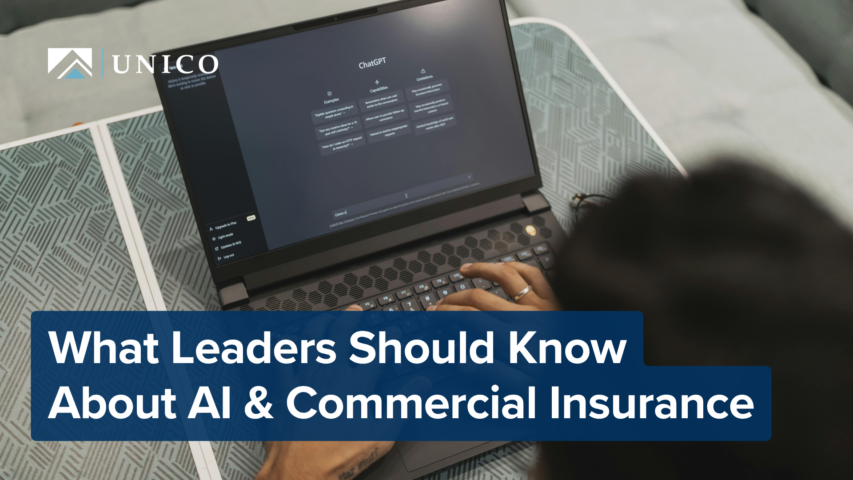
Artificial intelligence (AI) is rapidly changing how businesses operate, offering powerful tools to streamline workflows, analyze data and improve customer experiences. However, as more businesses integrate AI-powered tools into their operations, this technology also poses unique exposures.
In response, a growing number of insurers have begun updating policy language and, in some cases, introducing certain coverage exclusions for AI-related risks. As a business leader, understanding how AI impacts your company’s insurance needs is essential to managing risk and protecting your organization’s future.

Emerging AI Risks in Commercial Insurance
Many existing commercial insurance policies were created before AI became a core part of business operations. If businesses neglect to review these policies, they could face significant coverage gaps and unexpected out-of-pocket losses when claims arise. Insurers are updating policy language and introducing exclusions that specifically address these exposures. Key areas affected include:
Commercial General Liability (CGL)
New endorsements introduced in 2026 exclude coverage for bodily injury, property damage, and personal injury claims related to generative AI outputs. These endorsements may exclude coverage for third-party bodily injury, property damage, and personal and advertising injury losses stemming from generative AI outputs.
Professional Liability / Errors and Omissions (E&O)
The E&O segment has demonstrated some of the most aggressive exclusion activity towards AI exposures. In particular, some insurers have introduced broad exclusions that eliminate or significantly restrict coverage for losses tied to AI-powered professional services or advice. If your business uses AI tools in client-facing roles, such as chatbots, it is critical to understand these restrictions.
Directors and Officers Liability (D&O)
In the D&O space, some insurers have started implementing exclusions for certain AI-related exposures and using more restrictive policy language regarding AI governance risks. Increased scrutiny and concerns about “AI-washing” — overstating AI capabilities to investors or the public — have led to more restrictive policy language. Leaders must ensure accurate disclosures to avoid potential claim denials.
Fidelity and Crime
Standard fidelity and crime policies usually exclude coverage for cyber fraud, including social engineering attacks where employees are manipulated into transferring funds. To address AI-enabled fraud like deepfakes and business email compromise, businesses may need specialized endorsements, though coverage limits and requirements vary by insurer and incident type.
Cyber
Cyber policies generally cover AI-driven cyberattacks such as ransomware or data breaches caused by malicious AI programs. However, cyber
insurance does not apply to bodily injury and property damage losses, which could leave businesses with ongoing coverage gaps if their other policies fully exclude AI-related risks.
What Business Leaders Should Do Now
To protect your organization from unexpected losses related to AI, consider these essential steps:
1. Conduct a Comprehensive AI Inventory
Document all AI tools used across your business, including those embedded in third-party software. Share this information openly with your insurance providers during underwriting to ensure accurate coverage. Failure to disclose the full extent of AI usage could give insurers grounds to deny associated claims or rescind coverage moving forward.
2. Review Your Insurance Policies Thoroughly
Examine your policies beyond the declarations page, focusing on exclusions and how AI is defined. Businesses should request copies of any AI-related endorsements for their CGL, E&O, D&O and other liability policies, thereby ensuring full comprehension of what is and isn’t covered.
3. Evaluate Additional Coverage Needs
Do not assume your cyber insurance covers all AI risks. Specialized AI liability coverage may be necessary, especially if your business relies heavily on AI-driven services. Consult with trusted insurance professionals to explore the best options.
Preparing for the Future
AI will continue to transform business operations and the insurance industry. As a leader, staying informed and proactive is vital to managing these evolving risks. By working closely with your dedicated risk advisor, you can identify potential gaps and safeguard your company’s reputation.
We are here to partner with you in navigating these complexities and finding tailored insurance solutions that meet your unique needs. Contact us today to discuss how we can support your business in this rapidly changing landscape.
The information provided in this article is for informational purposes only and should not be considered as legal or insurance advice. Please consult with a qualified professional for guidance tailored to your specific situation.