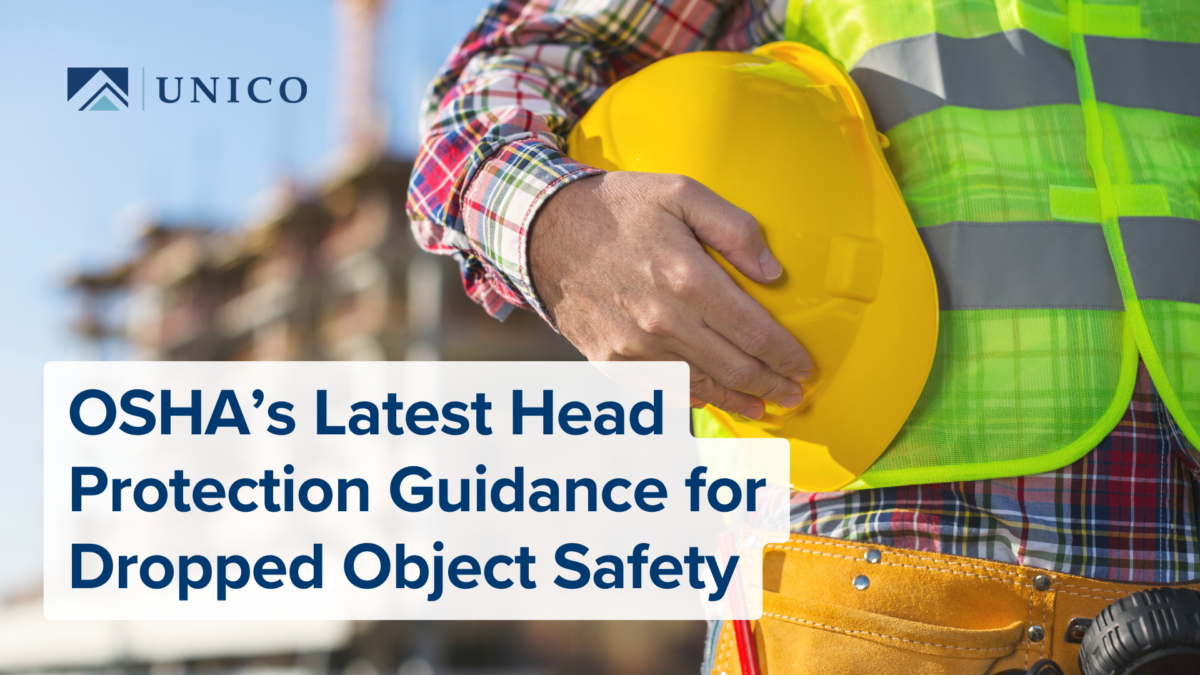
Regardless of size or height, dropped tools, materials, debris and equipment can cause significant harm. Injuries can range from cuts and fractures to life-threatening head and eye trauma. According to the Bureau of Labor Statistics, struck-by incidents from falling objects led to 282 worker deaths and approximately 14,000 nonfatal injuries in 2024 alone.
OSHA’s Updated Head Protection Guidance
In addition to understanding these risks, construction leaders must stay informed about OSHA’s latest requirements regarding head protection. OSHA now emphasizes the necessity of conducting thorough hazard assessments to determine the appropriate type of head protection for workers. While OSHA does not require employers to replace the widely used Type I hard hats, it mandates that employers evaluate specific hazards, including the potential for side impacts. If a hazard assessment identifies side impact risks, a Type II hard hat may be required to provide adequate protection.
Failure to perform a complete and adequate hazard assessment can lead to citations during OSHA inspections. This underscores the importance of proactive hazard evaluation and ensuring that head protection aligns with the actual risks on the job site. For further details, review OSHA’s Letter of Interpretation on Type II hard hats.
Practical Steps to Prevent Dropped Object Incidents
Complete Work at Ground Level When Possible
Minimizing work at elevation reduces the chance of dropped objects. Whenever feasible, assemble or prepare materials on the ground before moving them to higher levels. This approach limits the number of tools and materials handled at height, decreasing potential hazards.
Limit Tools and Materials Taken to Elevated Areas
Encourage workers to bring only what is necessary for the task. Excess tools or materials increase the risk of items being misplaced or knocked loose.
Secure Materials and Maintain Good Housekeeping
Store materials to prevent shifting or falling, and keep elevated work areas free of scrap and debris. Regular cleanup routines help eliminate potential falling-object hazards.
Install Toeboards, Guardrails, and Safety Nets
Physical barriers are essential to prevent objects from falling to lower levels. Ensure these systems are properly installed, maintained, and inspected regularly.
Use Tool Tethers and Appropriate Containers
Tools should be secured with tethering systems that meet recognized safety standards. Additionally, use tool bags, buckets, or hoists designed for safe transport and storage at height.
Establish Exclusion Zones
Barricade areas beneath overhead work to protect workers and visitors from falling objects. These zones should be clearly marked and monitored throughout the work.
Conduct Regular Inspections and Provide Training
A Shared Commitment to Safety
Preventing struck-by injuries from dropped objects requires a culture of safety built on shared responsibility and teamwork. By integrating proven prevention practices with OSHA’s head protection requirements, construction leaders can create safer job sites where every worker is protected.
We encourage you to contact us to learn more about protecting your business from wildfire-related losses. UNICO’s Safety & Loss Control Consultant, Ezra Schlecht, can help your team develop a personalized strategy that safeguards your property and supports your peace of mind.

Ezra Schlecht, CSHO, SSH, CRIS
Safety & Loss Control Consultant
The information provided in this article is for informational purposes only and should not be considered as legal or insurance advice. Please consult with a qualified professional for guidance tailored to your specific situation.